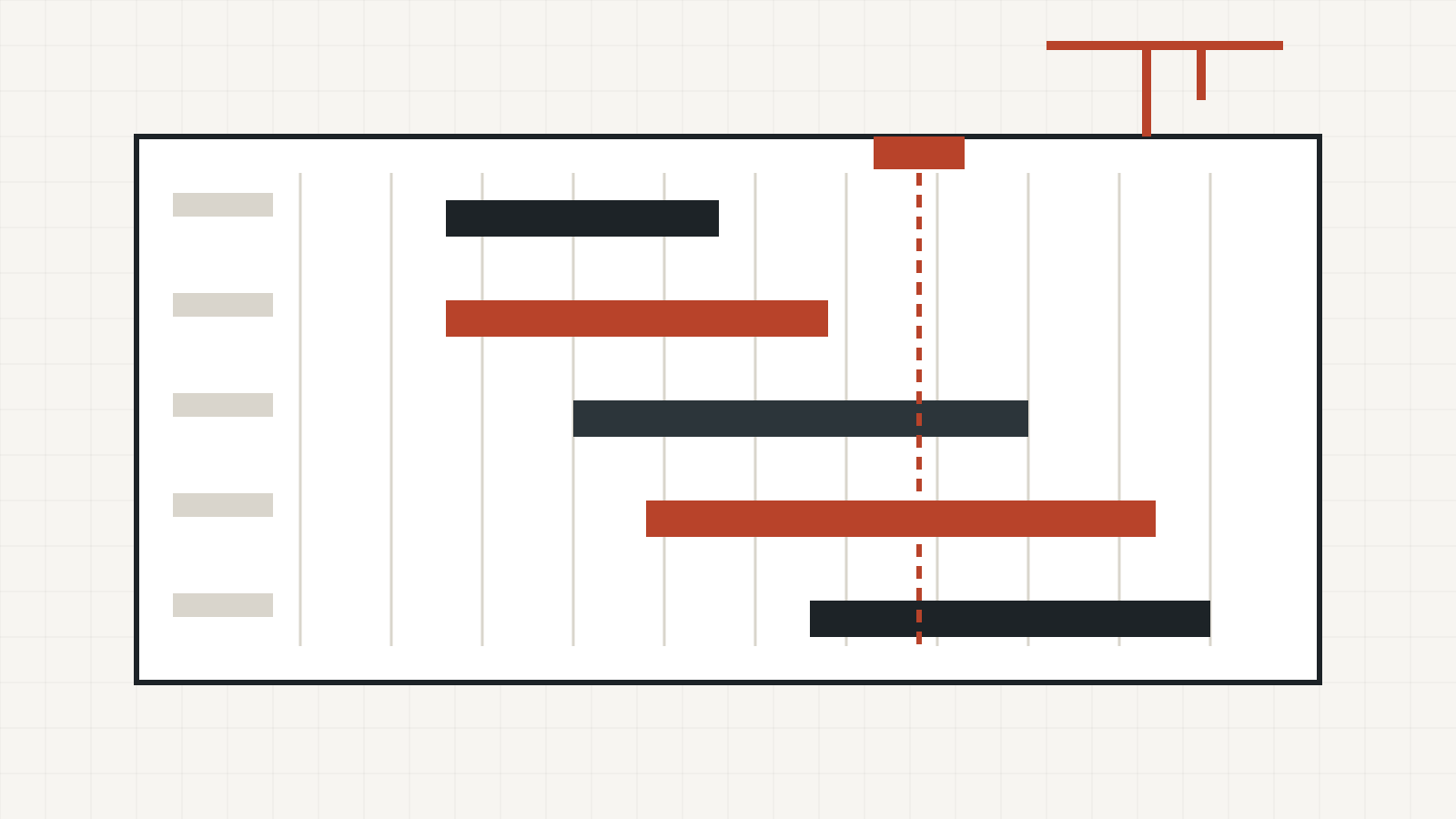
A programme is the project's timetable. It shows what happens, in what order, and by when. A good one helps everyone plan, from the crew to the client. Here is how it works.
What a programme contains
- Key stages: start on site, foundations, structure, weathertight, fit-out, handover.
- How long each task takes and what depends on what.
- Lead times for materials and specialist trades.
- Planned milestones for approvals and inspections.
The critical path
Some tasks can slip without harming the finish date. Others cannot. The critical path is the chain of tasks that sets the final date. Managing it closely is the heart of good project control.
Why dates slip
- Weather: heavy rain or frost can stop groundwork and concrete.
- Late decisions: choices on finishes or layout made after ordering deadlines.
- Deliveries: long lead items arriving late.
- Approvals: permits or inspections taking longer than planned.
- Ground surprises: conditions that differ from the survey.
How a good builder keeps on track
They order long lead items early, build float into the plan, and review the programme every week. They tell you about risks as soon as they appear, and they show you what is being done about them.
What you can do
- Make decisions by the dates in the programme.
- Ask for a weekly report with a short look ahead.
- Agree how changes will be handled before they happen.
A realistic programme is better than an optimistic one. Ask your builder to explain theirs, and you will learn a lot about how they work.
Join the discussion
Your email address will not be published. Comments are checked before they appear.